Cups and saucers
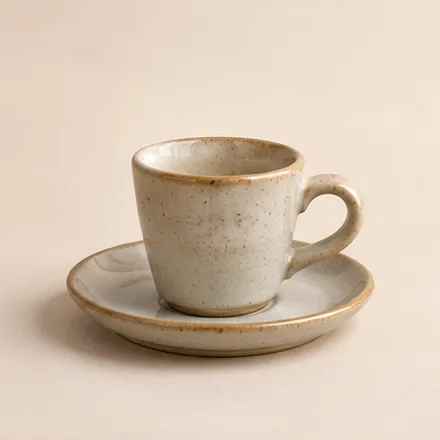
Match the cup foot to the saucer well and leave room for the handle. Specify the filled capacity and the preferred rim profile.
Ceramics / Body & glaze
Ceramics
Build a range around how its pieces work together, from a cup seated in its saucer to a cake stand carrying a full plate. Select the body and glaze alongside the shape.
Match the cup foot to the saucer well and leave room for the handle. Specify the filled capacity and the preferred rim profile.
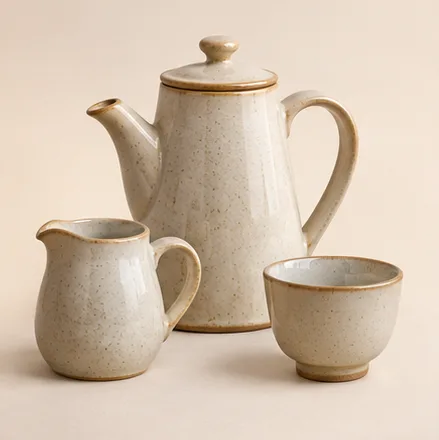
Coordinate the pot, cups, creamer and sugar bowl. Review the lid fit, handle clearance and pour together on a sample set.
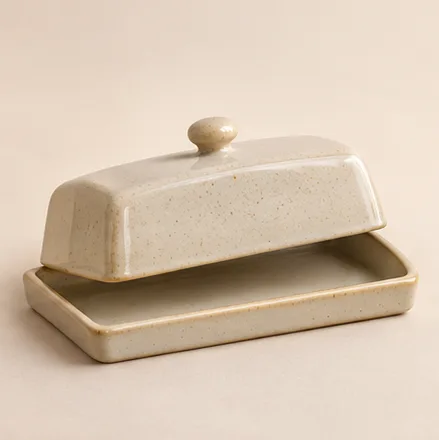
A shallow tray and tall cover can be sized for the local butter block. Check that the cover clears the butter and rests securely.
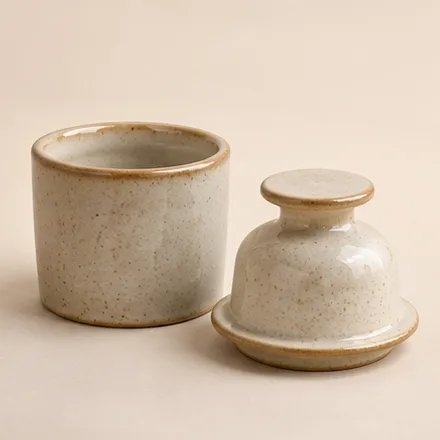
A two-piece crock holds butter in an inner bell above a water reservoir. Specify the bell capacity and check the fit of the two parts.
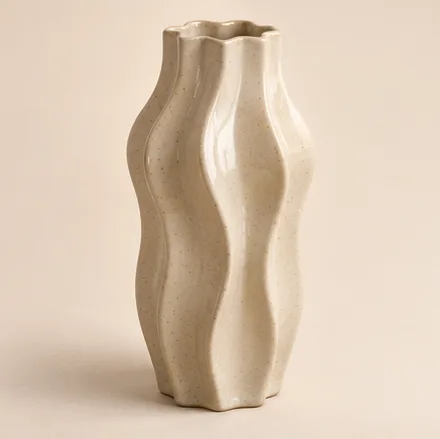
Select bud, bottle or wide-mouth forms to suit the arrangement. For fresh flowers, specify water-holding use and check the finished vessel.
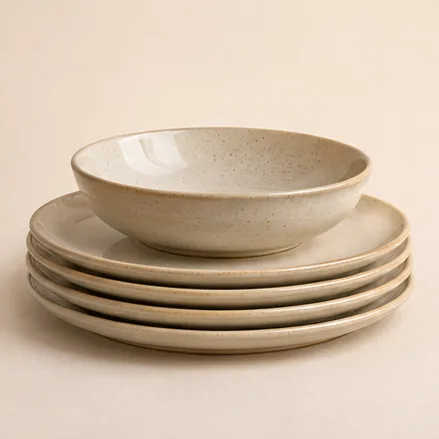
Compose place settings from plates, side plates and bowls. Agree on plate wells, stacking height and the range of acceptable glaze variation.
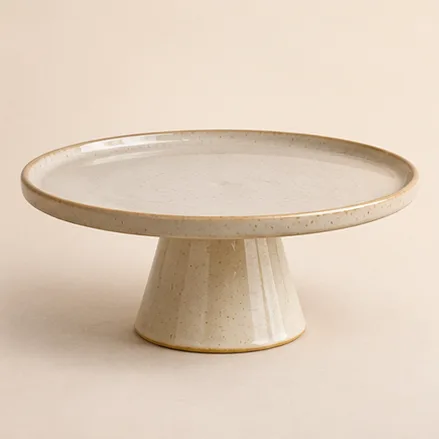
Match the pedestal width to the platter diameter. Check stability, surface level and packaging with the assembled sample.
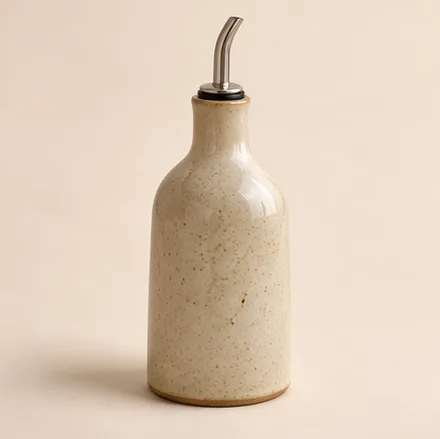
Choose a bottle size and pouring spout for the intended oil. Review stopper fit, pour control and cleaning access.
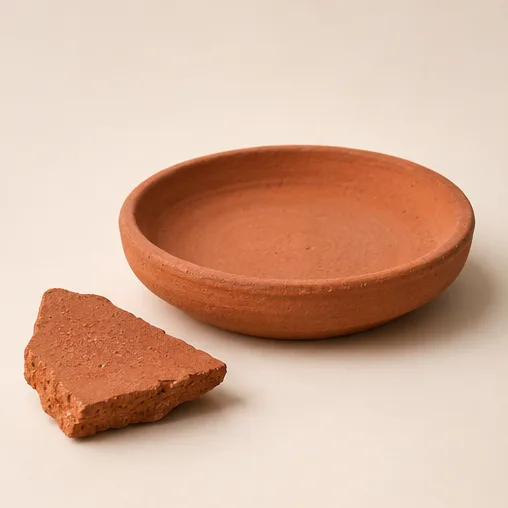
An iron-rich fired clay with warm red and orange tones. Glazed interiors and exposed exterior sections give very different finishes.
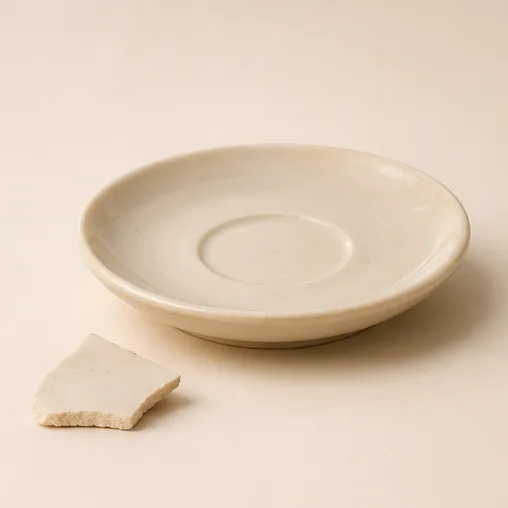
A refined earthenware body can give lighter, smoother surfaces for printed motifs. Review body colour and the glaze together.
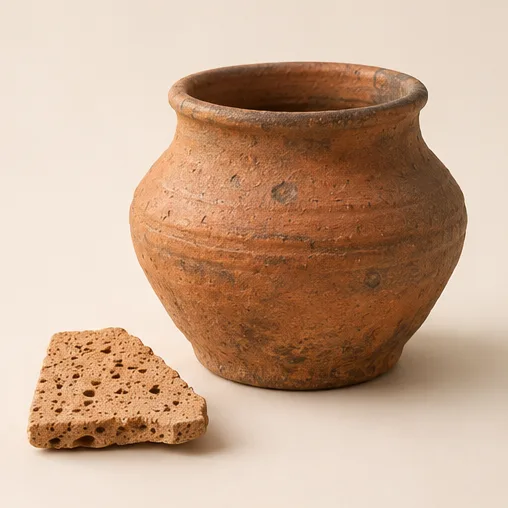
A porous fired body that takes coloured glazes well. For tableware, specify the glaze coverage and the intended food-contact surfaces.
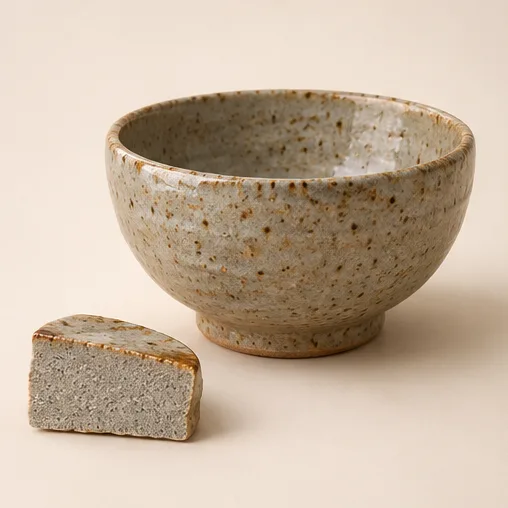
A dense fired body suited to substantial plates, bowls and mugs. Compare foot finish and stacking fit on the selected shape.
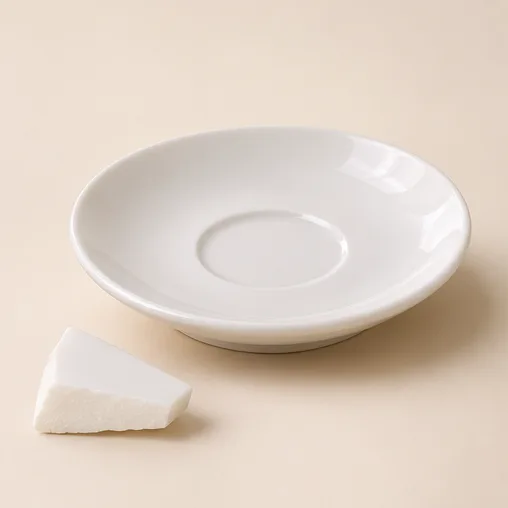
Feldspar helps the body vitrify during firing. Its light background showcases fine linework and clear glazes.
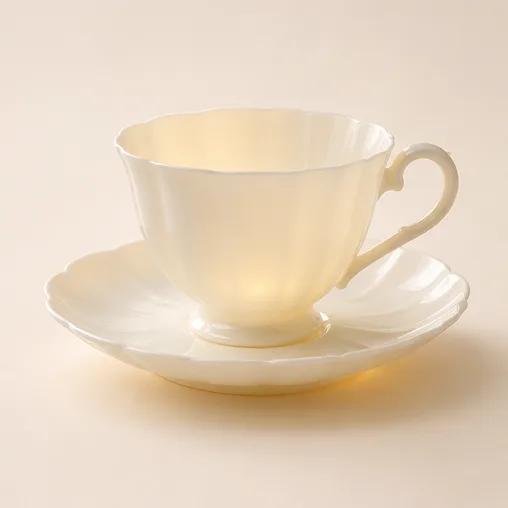
A body made with bone ash can produce thin, translucent walls. Request the composition where material origin is part of the buying brief.
Slip-casting suits hollow pots and vases. Pressing or forming on a profile can suit plates and bowls. Allow for shrinkage when approving dimensions.
Review the base body with the intended glaze and firing schedule. A fired sample shows rim coverage, colour and foot finish more accurately than a colour chip.
Specify decal, hand-painted or relief details with their position on the piece. Check decorated samples for fit, appearance and the intended use.
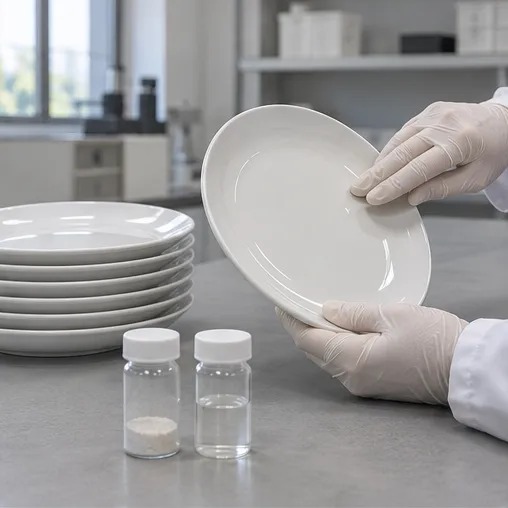
For food-contact SKUs, ask sales for existing reports covering the body, glaze, decoration and country of sale. Relevant US FDA or German LFGB requirements depend on the article and market. Lead and cadmium release may be part of the test scope. Our usual laboratories are Intertek and SGS, and we can arrange additional buyer-requested testing on an agreed sample.
Samples usually travel by DHL. A typical production estimate is 25–35 days. Sales will confirm the schedule for the quantity, decoration and packing you approve, and quote transit separately.
Tell sales the shapes, capacities, glaze and destination you need. Your sales contact can arrange a registration code so you can sign in and view your company's ceramic catalogue.